FILE相关结构

CTF-wiki上对FILE的介绍如下:

1
FILE 在 Linux 系统的标准 IO 库中是用于描述文件的结构,称为文件流。 FILE 结构在程序执行 fopen 等函数时会进行创建,并分配在堆中。我们常定义一个指向 FILE 结构的指针来接收这个返回值。

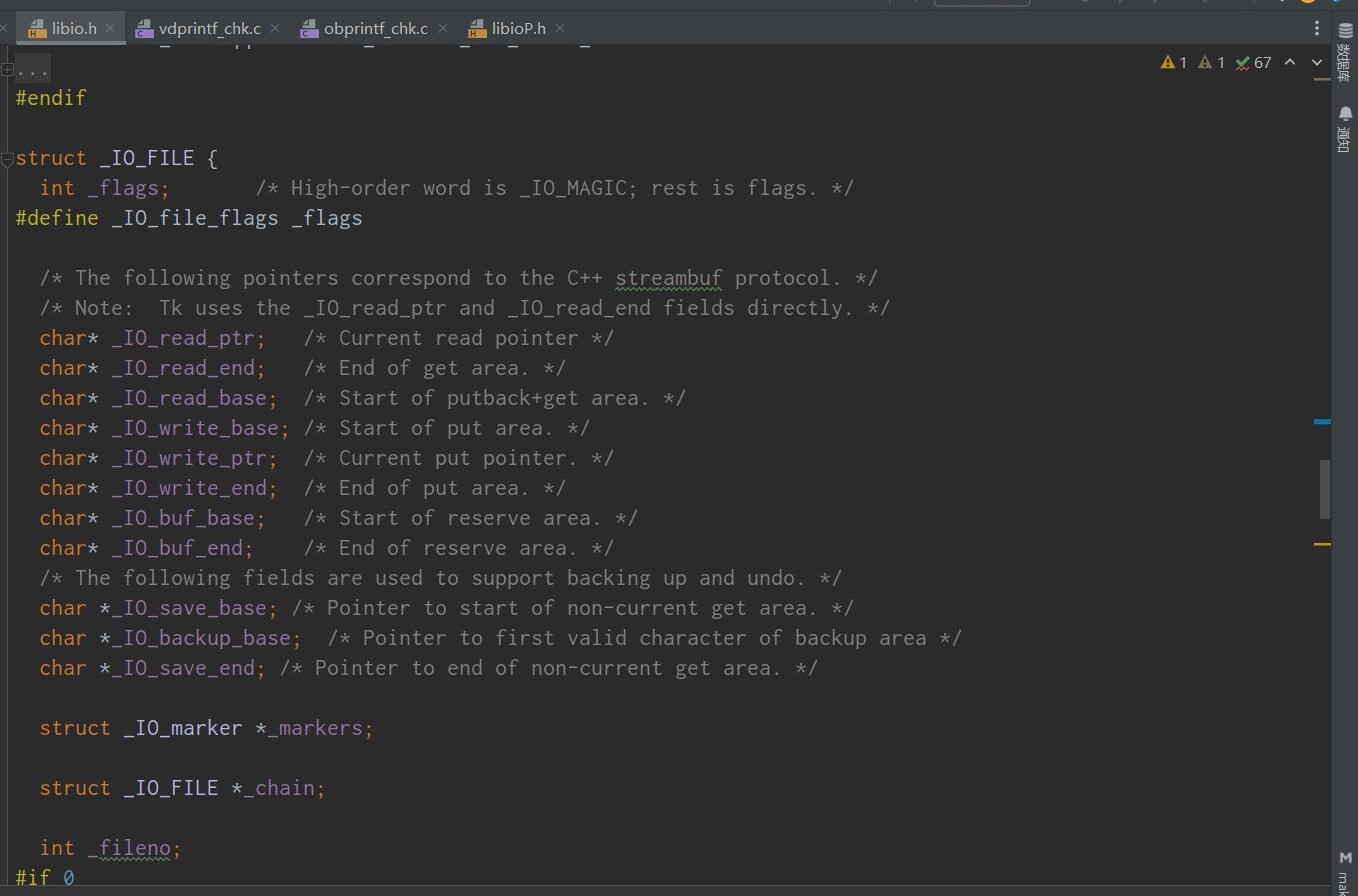
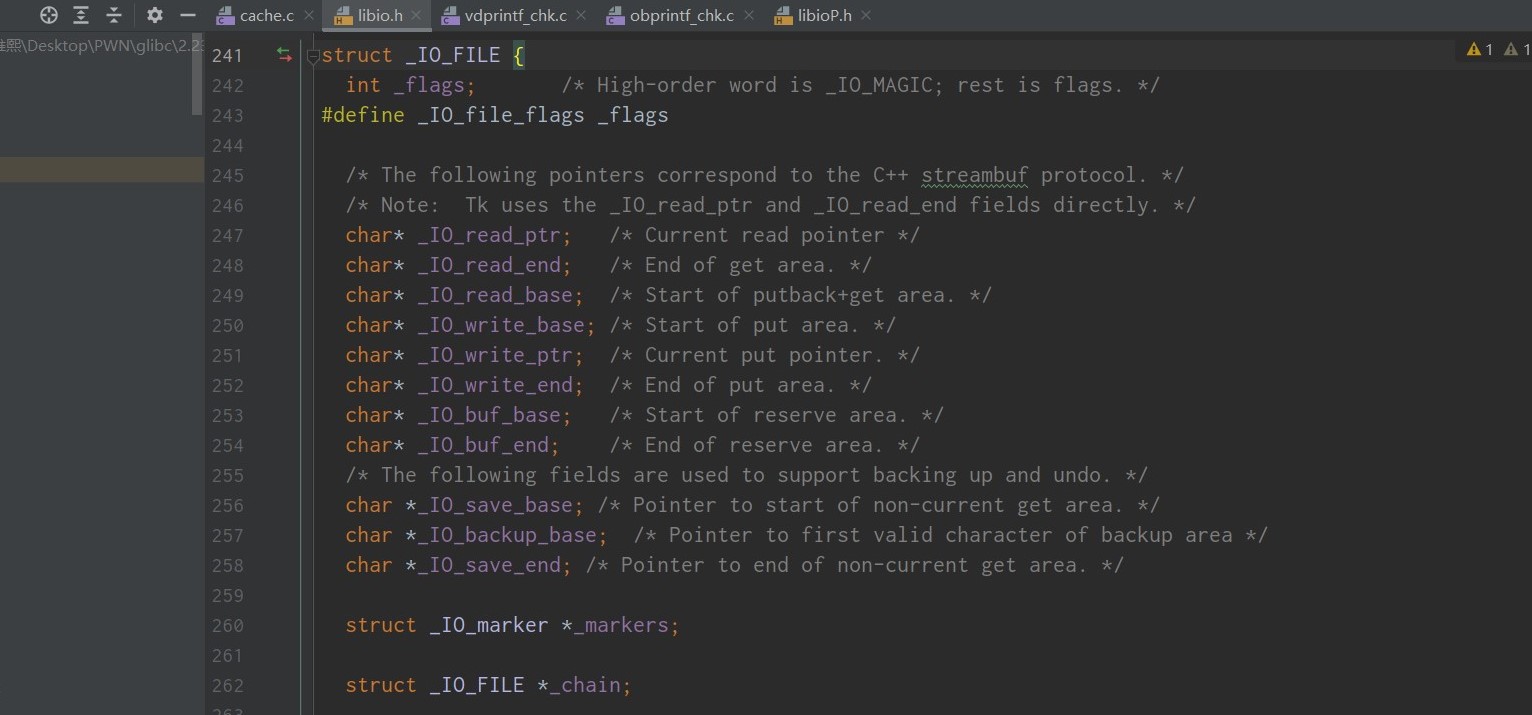
FILE 结构定义在 libio.h 中

1

1
2
3
4
5
6
7
8
9
10
11
12
13
14
15
16
17
18
19
20
21
22
23
24
25
26
27
28
29
30
31
32
33
34
35
36
37
38
39
40
41
42
43
44
45
46
47
48
49
50
51
52
53
54
55
56
57
58
59
60
61
62
63
64
65
66
struct _IO_FILE {
int _flags; /* High-order word is _IO_MAGIC; rest is flags. */
#define _IO_file_flags _flags

/* The following pointers correspond to the C++ streambuf protocol. */
/* Note: Tk uses the _IO_read_ptr and _IO_read_end fields directly. */
char* _IO_read_ptr; /* Current read pointer */
char* _IO_read_end; /* End of get area. */
char* _IO_read_base; /* Start of putback+get area. */
char* _IO_write_base; /* Start of put area. */
char* _IO_write_ptr; /* Current put pointer. */
char* _IO_write_end; /* End of put area. */
char* _IO_buf_base; /* Start of reserve area. */
char* _IO_buf_end; /* End of reserve area. */
/* The following fields are used to support backing up and undo. */
char *_IO_save_base; /* Pointer to start of non-current get area. */
char *_IO_backup_base; /* Pointer to first valid character of backup area */
char *_IO_save_end; /* Pointer to end of non-current get area. */

struct _IO_marker *_markers;

struct _IO_FILE *_chain;

int _fileno;
#if 0
int _blksize;
#else
int _flags2;
#endif
_IO_off_t _old_offset; /* This used to be _offset but it's too small. */

#define __HAVE_COLUMN /* temporary */
/* 1+column number of pbase(); 0 is unknown. */
unsigned short _cur_column;
signed char _vtable_offset;
char _shortbuf[1];

/* char* _save_gptr; char* _save_egptr; */

_IO_lock_t *_lock;
#ifdef _IO_USE_OLD_IO_FILE
};
struct _IO_FILE_complete
{
struct _IO_FILE _file;
#endif
#if defined _G_IO_IO_FILE_VERSION && _G_IO_IO_FILE_VERSION == 0x20001
_IO_off64_t _offset;
# if defined _LIBC || defined _GLIBCPP_USE_WCHAR_T
/* Wide character stream stuff. */
struct _IO_codecvt *_codecvt;
struct _IO_wide_data *_wide_data;
struct _IO_FILE *_freeres_list;
void *_freeres_buf;
# else
void *__pad1;
void *__pad2;
void *__pad3;
void *__pad4;

size_t __pad5;
int _mode;
/* Make sure we don't get into trouble again. */
char _unused2[15 * sizeof (int) - 4 * sizeof (void *) - sizeof (size_t)];
#endif
};

进程中的 FILE 结构会通过 chain域彼此连接形成一个链表,链表头部用全局变量_IO_list_all 表示,通过这个值我们可以遍历所有的 FILE 结构。

1
extern struct _IO_FILE_plus *_IO_list_all;

在标准 I/O 库中,每个程序启动时有三个文件流是自动打开的:stdin、stdout、stderr。因此在初始状态下,_IO_list_all 指向了一个有这些文件流构成的链表,但是需要注意的是这三个文件流位于 libc.so 的数据段。而我们使用 fopen 创建的文件流是分配在堆内存上的。

我们可以在 libc.so 中找到 stdin\stdout\stderr 等符号,这些符号是指向 FILE 结构的指针,真正结构的符号是:

1
2
3
_IO_2_1_stderr_
_IO_2_1_stdout_
_IO_2_1_stdin_

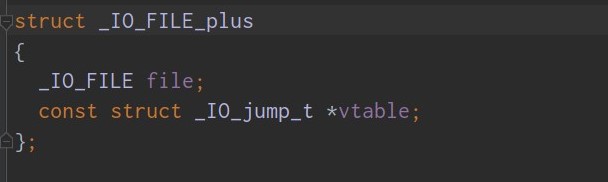
但是事实上_IO_FILE 结构外包裹着另一种结构_IO_FILE_plus,其中包含了一个重要的指针 vtable 指向了一系列函数指针。

在 libc2.23 版本下,32 位的 vtable 偏移为 0x94,64 位偏移为 0xd8
2

vtable 是 IO_jump_t 类型的指针,IO_jump_t 中保存了一些函数指针,在后面我们会看到在一系列标准 IO 函数中会调用这些函数指针

fread

fread 是标准 IO 库函数,作用是从文件流中读数据,函数原型如下

1
size_t fread ( void *buffer, size_t size, size_t count, FILE *stream) ;
  • buffer 存放读取数据的缓冲区。
  • size:指定每个记录的长度。
  • count: 指定记录的个数。
  • stream:目标文件流。
  • 返回值:返回读取到数据缓冲区中的记录个数

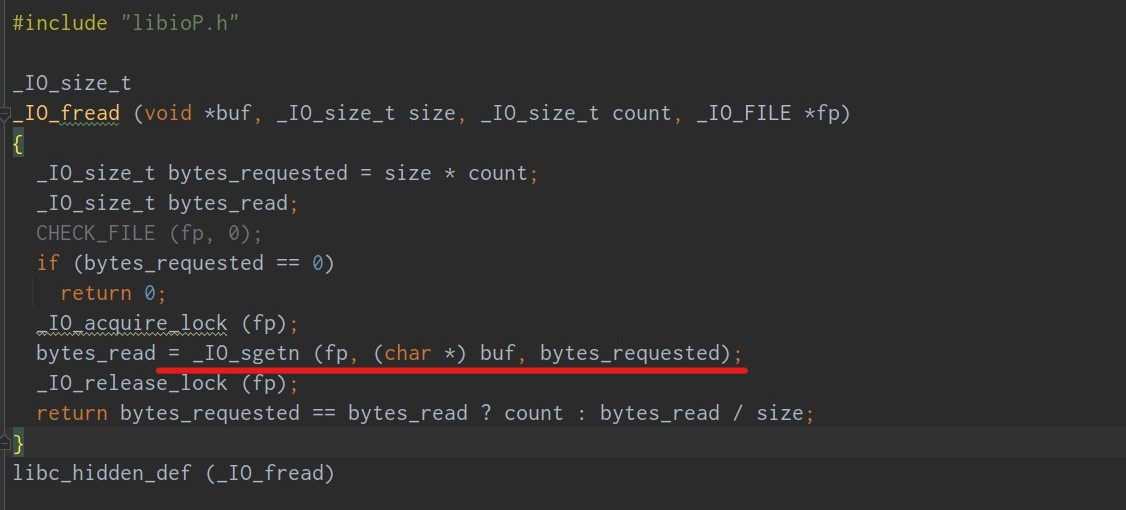
fread 的代码位于 / libio/iofread.c 中,函数名为_IO_fread,但真正的功能实现在子函数_IO_sgetn 中。
3

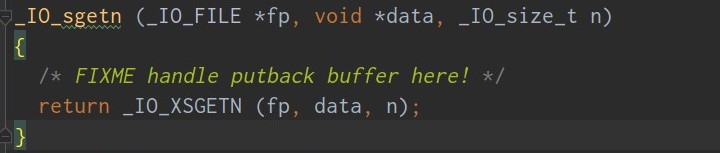
_IO_sgetn在/ libio/genops.c中

4

在_IO_sgetn 函数中会调用_IO_XSGETN,而_IO_XSGETN 是_IO_FILE_plus.vtable 中的函数指针,在调用这个函数时会首先取出 vtable 中的指针然后再进行调用。在默认情况下函数指针是指向_IO_file_xsgetn 函数的,

fwrite

fwrite 同样是标准 IO 库函数,作用是向文件流写入数据,函数原型如下

1
size_t fwrite(const void* buffer, size_t size, size_t count, FILE* stream);
  • buffer: 是一个指针,对 fwrite 来说,是要写入数据的地址;
  • size: 要写入内容的单字节数;
  • count: 要进行写入 size 字节的数据项的个数;
  • stream: 目标文件指针;
  • 返回值:实际写入的数据项个数 count。

fwrite 的代码位于 / libio/iofwrite.c 中,函数名为_IO_fwrite。 在_IO_fwrite 中主要是调用_IO_XSPUTN 来实现写入的功能。

_IO_XSPUTN 位于_IO_FILE_plus 的 vtable 中,调用这个函数需要首先取出 vtable 中的指针,再跳过去进行调用

1
written = _IO_sputn (fp, (const char *) buf, request);

在_IO_XSPUTN 对应的默认函数_IO_new_file_xsputn 中会调用同样位于 vtable 中的_IO_OVERFLOW

_IO_OVERFLOW 默认对应的函数是_IO_new_file_overflow

1
2
3
4
5
6
7
8
9
10
11
12
13
14
15
16
17
18
19
20
21
22
23
24
25
26
27
28
29
30
31
32
33
34
35
36
37
38
39
40
41
42
43
44
45
46
47
48
49
50
_IO_new_file_overflow (_IO_FILE *f, int ch)
{
if (f->_flags & _IO_NO_WRITES) /* SET ERROR */
{
f->_flags |= _IO_ERR_SEEN;
__set_errno (EBADF);
return EOF;
}
/* If currently reading or no buffer allocated. */
if ((f->_flags & _IO_CURRENTLY_PUTTING) == 0 || f->_IO_write_base == NULL)
{
/* Allocate a buffer if needed. */
if (f->_IO_write_base == NULL)
{
_IO_doallocbuf (f);
_IO_setg (f, f->_IO_buf_base, f->_IO_buf_base, f->_IO_buf_base);
}
/* Otherwise must be currently reading.
If _IO_read_ptr (and hence also _IO_read_end) is at the buffer end,
logically slide the buffer forwards one block (by setting the
read pointers to all point at the beginning of the block). This
makes room for subsequent output.
Otherwise, set the read pointers to _IO_read_end (leaving that
alone, so it can continue to correspond to the external position). */
if (__glibc_unlikely (_IO_in_backup (f)))
{
size_t nbackup = f->_IO_read_end - f->_IO_read_ptr;
_IO_free_backup_area (f);
f->_IO_read_base -= MIN (nbackup,
f->_IO_read_base - f->_IO_buf_base);
f->_IO_read_ptr = f->_IO_read_base;
}

if (f->_IO_read_ptr == f->_IO_buf_end)
f->_IO_read_end = f->_IO_read_ptr = f->_IO_buf_base;
f->_IO_write_ptr = f->_IO_read_ptr;
f->_IO_write_base = f->_IO_write_ptr;
f->_IO_write_end = f->_IO_buf_end;
f->_IO_read_base = f->_IO_read_ptr = f->_IO_read_end;

f->_flags |= _IO_CURRENTLY_PUTTING;
if (f->_mode <= 0 && f->_flags & (_IO_LINE_BUF | _IO_UNBUFFERED))
f->_IO_write_end = f->_IO_write_ptr;
}
if (ch == EOF)
return _IO_do_write (f, f->_IO_write_base,
f->_IO_write_ptr - f->_IO_write_base);
if (f->_IO_write_ptr == f->_IO_buf_end ) /* Buffer is really full */
if (_IO_do_flush (f) == EOF)
return EOF;

在_IO_new_file_overflow 内部最终会调用系统接口 write 函数

fopen

fopen 在标准 IO 库中用于打开文件,函数原型如下

1
FILE *fopen(char *filename, *type);
  • filename: 目标文件的路径
  • type: 打开方式的类型
  • 返回值: 返回一个文件指针

在 fopen 内部会创建 FILE 结构并进行一些初始化操作

首先在 fopen 对应的函数__fopen_internal 内部会调用 malloc 函数,分配 FILE 结构的空间。因此我们可以获知 FILE 结构是存储在堆上的,之后会为创建的 FILE 初始化 vtable,并调用_IO_file_init 进一步初始化操作

1
2
3
4
5
6
7
8
9
10
11
12
13
14
15
16
17
18
    struct _IO_wide_data wd;
} *new_f = (struct locked_FILE *) malloc (sizeof (struct locked_FILE));

if (new_f == NULL)
return NULL;
#ifdef _IO_MTSAFE_IO
new_f->fp.file._lock = &new_f->lock;
#endif
#if defined _LIBC || defined _GLIBCPP_USE_WCHAR_T
_IO_no_init (&new_f->fp.file, 0, 0, &new_f->wd, &_IO_wfile_jumps);
#else
_IO_no_init (&new_f->fp.file, 1, 0, NULL, NULL);


#endif
_IO_JUMPS (&new_f->fp) = &_IO_file_jumps;
_IO_file_init (&new_f->fp);

在_IO_file_init 函数的初始化操作中,会调用_IO_link_in 把新分配的 FILE 链入_IO_list_all 为起始的 FILE 链表中

总结一下 fopen 的操作是

  • 使用 malloc 分配 FILE 结构
  • 设置 FILE 结构的 vtable
  • 初始化分配的 FILE 结构
  • 将初始化的 FILE 结构链入 FILE 结构链表中
  • 调用系统调用打开文件

fclose

fclose 是标准 IO 库中用于关闭已打开文件的函数,其作用与 fopen 相反

功能:关闭一个文件流,使用 fclose 就可以把缓冲区内最后剩余的数据输出到磁盘文件中,并释放文件指针和有关的缓冲区

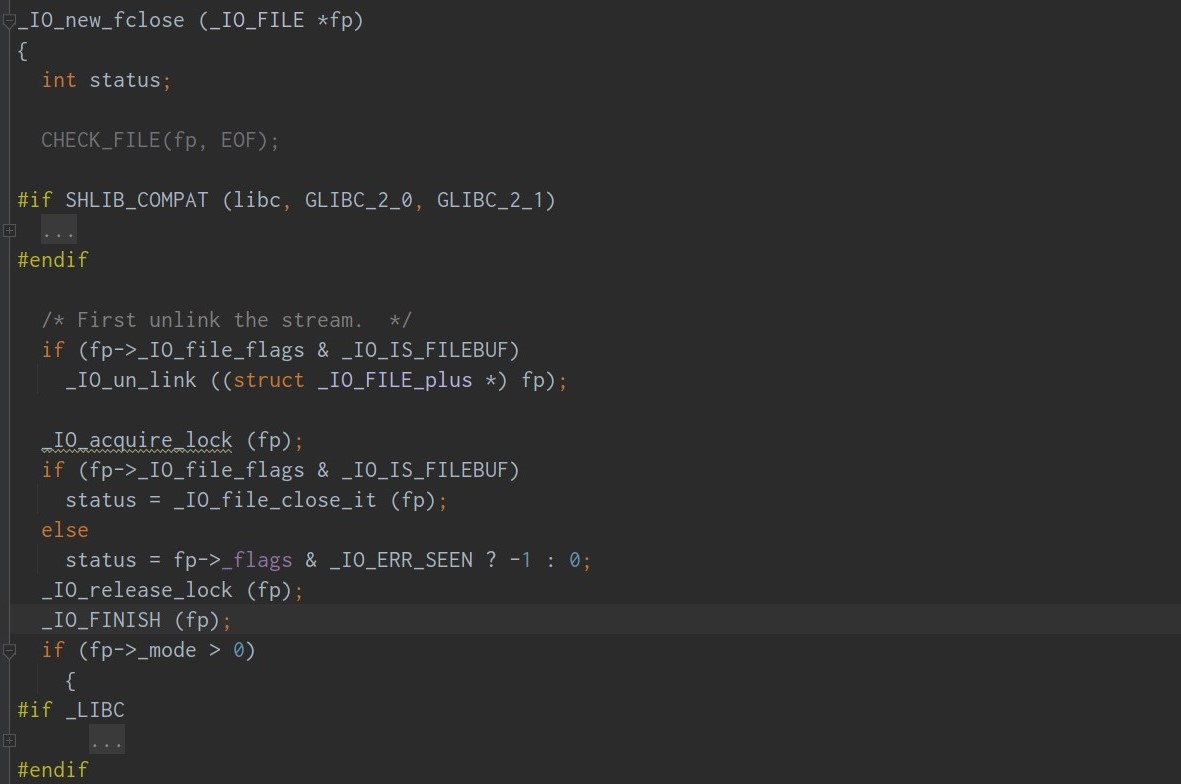
fclose 首先会调用_IO_unlink_it 将指定的 FILE 从_chain 链表中脱链

1
2
if (fp->_IO_file_flags & _IO_IS_FILEBUF)
_IO_un_link ((struct _IO_FILE_plus *) fp);

之后会调用_IO_file_close_it 函数,_IO_file_close_it 会调用系统接口 close 关闭文件

1
2
if (fp->_IO_file_flags & _IO_IS_FILEBUF)
status = _IO_file_close_it (fp);

最后调用 vtable 中的_IO_FINISH,其对应的是_IO_file_finish 函数,其中会调用 free 函数释放之前分配的 FILE 结构
5

printf/puts

printf 和 puts 是常用的输出函数,在 printf 的参数是以’\n’结束的纯字符串时,printf 会被优化为 puts 函数并去除换行符。

puts 在源码中实现的函数是_IO_puts,这个函数的操作与 fwrite 的流程大致相同,函数内部同样会调用 vtable 中的_IO_sputn,结果会执行_IO_new_file_xsputn,最后会调用到系统接口 write 函数。

printf 的调用栈回溯如下,同样是通过_IO_file_xsputn 实现

1
2
3
4
5
6
vfprintf+11
_IO_file_xsputn
_IO_file_overflow
funlockfile
_IO_file_write
write